
The 5 Best WordPress Slider Plugins
Slideshows are vastly under-rated by webdesigners. Slideshows can be fast, stylish, accessible and mobile-friendly.
You’ll find slideshows on the homepages of Apple, Microsoft, Nvidia, Netflix and many other leading businesses.
A gorgeous slider plugin can really help you to create a great looking website. And if you choose right, you don’t have to see your Google PageSpeed score. A dynamic site does not have to mean a slow site.
But WordPress slider plugins often have a bad reputation. Many are slow, overloaded with animations, and hurt your Core Web Vitals.
In this guide, we’ll compare the best WordPress slider plugins based on speed, ease of use, features, SEO, accessibility, and value. If you want a fast, modern slideshow that works with Gutenberg and page builders, MetaSlider consistently stands out.
In this post, we’ll compare five slideshow plugins that deliver cinematic visuals without sacrificing your site’s SEO.
Table of Contents
1. MetaSlider Slideshow: The Best Choice
MetaSlider is our recommendation as the best slider plugin for WordPress. It doesn’t try to be a graphic design suite; it focuses on being fast, accessible, SEO-friendly, and easy to set up. Click here to see MetaSlider demos.
- Fast: While many slideshows may slow down your site. MetaSlider is regularly reported to be the fastest slideshow plugin. MetaSlider has the lowest impact on page load times.
- Accessible: Business owners who value site speed and simplicity over flashy animations. Those heavy, layered designs are often not accessible and can’t be viewed by many visitors. MetaSlider works hard to make sure all slideshows are accessible.
- Key Feature: Intelligent Image Cropping ensures all your slides are uniform without you having to resize them in Photoshop first.

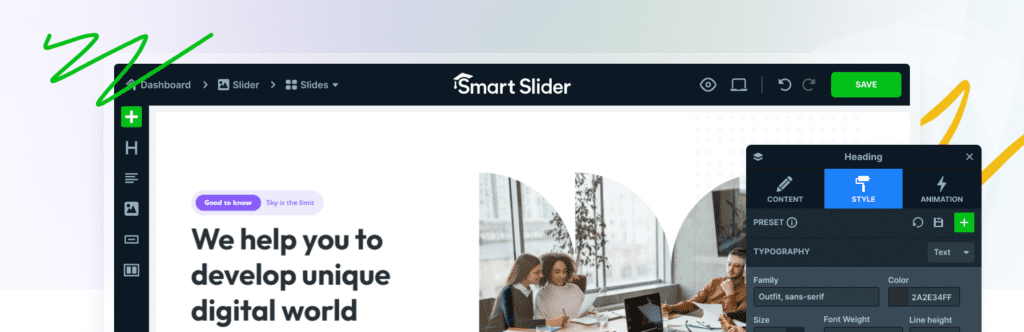
2. Smart Slider: Fancy Effects
If you want the perfect middle ground between a simple image fader and a complex design tool, Smart Slider 3 is worth considering.
- Best For: Most users who want professional results without a steep learning curve.
- Key Feature: A library of 180+ templates and a unique “Canvas” mode where you can drag and drop layers (text, buttons, images) anywhere.
- Pros: Very generous free version; intuitive interface; excellent “Dynamic Post” feature to turn blog posts into slides automatically.
- Cons: The “Pro” features (like Layer Animations) can get expensive.
3. Slider Revolution: Visual Powerhouse
Slider Revolution is less of a plugin and more of a full-blown visual editor.
- Best For: Professional designers and developers building high-end landing pages.
- Key Feature: The Object Library and Special Effects which includes particles, 3D parallax, and bubble effects.
- Pros: Great visual potential, with over 2000+ elements included.
- Cons: There’s a steep learning curve: the UI looks like Adobe Photoshop. The plugin is heavy on resources, and there’s no free version.
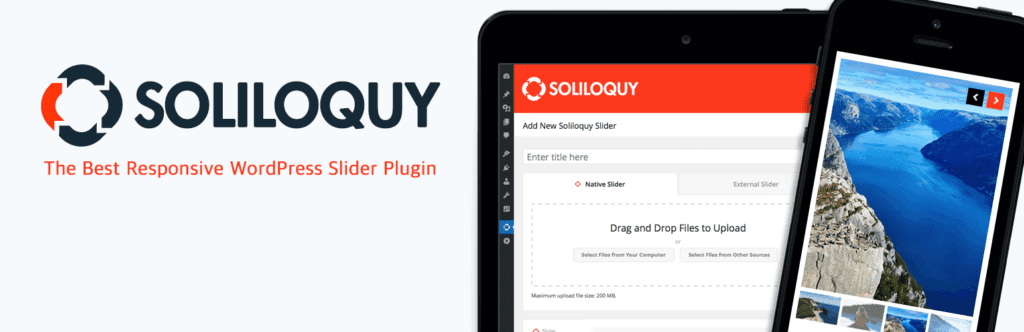
4. Soliloquy: The Performance Specialist
Soliloquy was built with a “code-first” philosophy. It is widely considered the best-coded slider plugin, making it a favorite for developers who want a “lean” site.
- Best For: Users who need a lightweight but powerful slider with specific integrations such as WooCommerce.
- Key Feature: PDF Slider Add-on: it can literally turn your PDF presentation into a web slideshow.
- Pros: Fast, with a dedicated WooCommerce integration for product sliders.
5. LayerSlider: The Creative Suite
LayerSlider is a direct rival to Slider Revolution. It’s slightly more user-friendly but still offers professional-grade animation tools.
- Best For: Creative portfolios and agency sites.
- Key Feature: The Revisions Feature. It saves snapshots of your work, so if you mess up a complex animation, you can revert to a previous version instantly.
- Pros: Great 3D transitions; includes a “Popup” builder; cheaper than many premium alternatives.
- Cons: Can be overwhelming for beginners; requires a powerful hosting environment for smooth editing.
WordPress Slider Frequently Asked Questions
Are WordPress sliders bad for SEO?
Not necessarily. Modern slider plugins can be SEO-friendly when they’re used correctly.
To keep your sliders optimized:
- Compress images before uploading them.
- Use descriptive alt text for every image.
- Limit the number of slides on a page.
- Avoid excessive animations that can slow down loading.
- Choose a plugin that’s built with performance in mind.
A lightweight slider plugin helps preserve page speed, which is an important factor for both search rankings and user experience.
Do sliders slow down WordPress websites?
They can, but the biggest cause is usually large, unoptimized images rather than the slider itself.
A well-built plugin combined with optimized images should have minimal impact on performance. To improve loading times:
- Resize images before uploading.
- Use modern image formats such as WebP when possible.
- Enable lazy loading if appropriate.
- Avoid adding dozens of slides to a single page.
The result is a slideshow that looks great without noticeably affecting your site’s speed.
Do WordPress sliders affect website performance?
They can, but their impact depends on how they’re used. Large image files, autoplay videos, and excessive animations are more likely to slow a page than the slider plugin itself.
- To keep your site fast:
- Choose a well-maintained plugin that’s optimized for performance.
- Resize and compress images before uploading.
- Use modern image formats like WebP when possible.
- Limit the number of slides on a page.
- Avoid unnecessary animations and effects.
Are WordPress sliders mobile-friendly?
Most modern slider plugins are designed to work on smartphones and tablets. However, it’s still important to test your sliders on different screen sizes.
Look for features such as responsive layouts, touch and swipe navigation, adaptive image sizing, and customizable controls. These help ensure your slideshow provides a good experience for visitors on any device.
Comparing the 5 Slider Plugins
| Plugin | Best for | Free Version | Performance | Ease of Use |
|---|---|---|---|---|
| MetaSlider ⭐ | Most WordPress sites | ✅ | ⭐⭐⭐⭐⭐ | ⭐⭐⭐⭐⭐ |
| Smart Slider 3 | Designers | ✅ | ⭐⭐⭐⭐ | ⭐⭐⭐ |
| Slider Revolution | Agencies | ❌ | ⭐⭐ | ⭐⭐ |
| Soliloquy | Beginners | ✅ | ⭐⭐⭐⭐ | ⭐⭐⭐⭐ |
| LayerSlider | Animation-heavy sites | ❌ | ⭐⭐ | ⭐⭐ |
WordPress slider conclusion
Every plugin in this list has strengths, but MetaSlider strikes the best balance between performance, usability, accessibility, and features. Whether you’re building a business website, portfolio, blog, or WooCommerce store, it’s the slider plugin we’d recommend to most WordPress users. If you want beautiful slides without slowing your site down, MetaSlider is the clear choice.
